
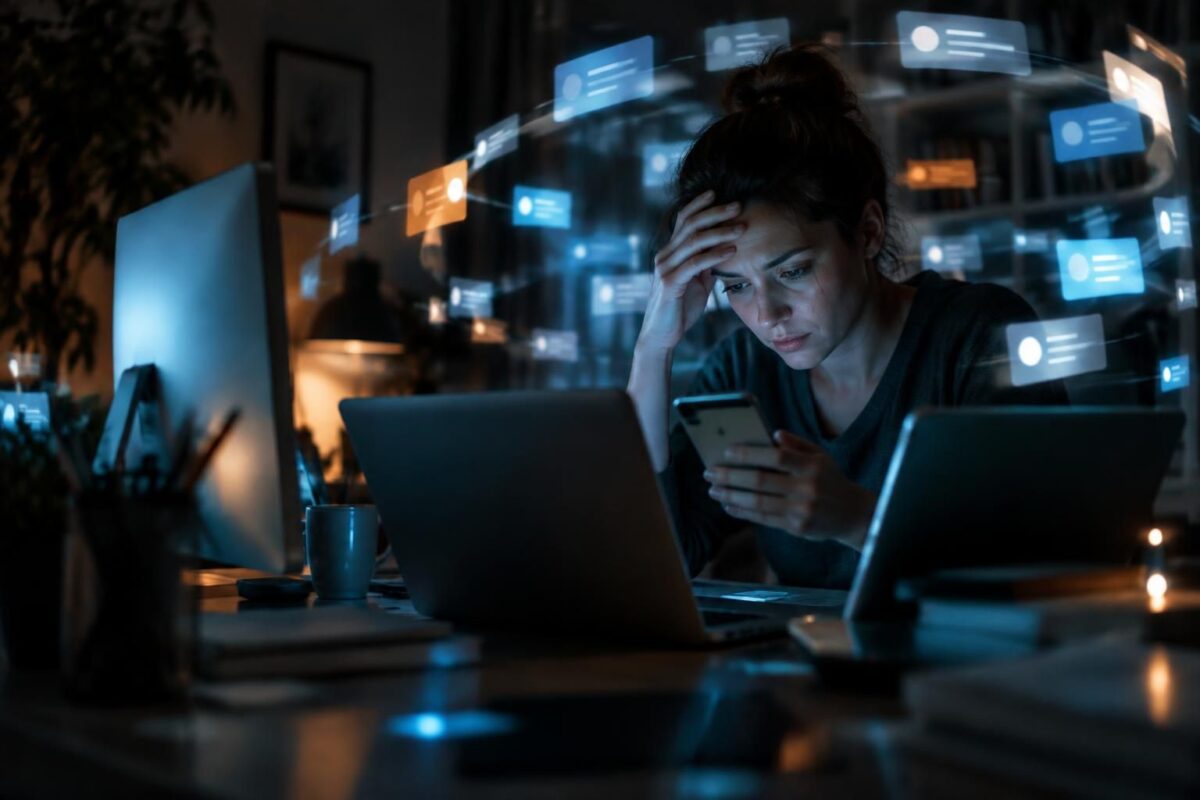
Technology: endless news, your stress loves it
Hi, this is Solène. To ease the stress of nonstop news, limit notifications, choose specific times to catch up, and schedule screen-free periods.
Technology helps us keep up with the news, but its continuous stream can quickly fuel anxiety and fatigue. A few simple guidelines can help you take back control without shutting yourself off from the world.
Things to do now
- Turn off nonessential notifications, especially those from news outlets and social media.
- Choose two or three times during the day to check the news, rather than checking your phone every time you take a break.
- Keep your phone away from your bed and set aside the last 30 minutes of the day for an activity without screens.
- Focus on one task at a time: close unnecessary tabs and finish one thing before moving on to the next.
- Take a break for a few minutes to walk, breathe slowly, or look into the distance.
A common trap is opening an app “just for a minute” and getting drawn into one piece of content after another. If this habit keeps coming back, these tips on how to stop doomscrolling without relapsing and this article on using screens in the evening can help you spot automatic habits.
How nonstop news feeds digital stress
Technostress refers to the tension associated with using digital tools or finding it difficult to disconnect from them. It can arise when messages, alerts, and content to deal with seem never-ending.
Information overload demands constant attention. When you keep moving from one notification to another, your brain can struggle to prioritize what’s urgent and remain on alert, even when there is no immediate danger.
The mechanisms that keep us hyperconnected
The pressure to respond quickly, the fear of missing important news, and a lack of confidence with certain tools can intensify anxiety. Scrolling through social media can sometimes add constant comparison to the demands already competing for your attention.
Imagine Léa, who checks the news between tasks. An alert leads her to a thread of reactions, then to other topics: she returns to her work distracted and worried. The problem isn’t staying informed, but being swept along by a limitless stream.
Recognizing the signs of technostress in everyday life
Digital stress doesn’t affect everyone in the same way. Unusual irritability, difficulty concentrating, a constant sense of urgency, or disrupted sleep may be signs that it’s time to rethink your habits.
At work, hyperconnectivity can blur the boundaries between work and personal time. Replying to emails late at night may sometimes seem necessary, but being constantly available increases the risk of burnout and makes it harder to recharge.
| Situation | Possible effect | Helpful guideline |
|---|---|---|
| Frequent alerts | Fragmented attention | Keep only essential notifications |
| Checking the news without a break | Worry and mental fatigue | Set specific times to catch up on the news |
| Work messages in the evening | Difficulty switching off | Set availability hours |
| Unfamiliar tool | Feeling incompetent | Ask for a demonstration or training |
Reducing information overload without switching everything off
Completely disconnecting isn’t always realistic, especially when you rely on tools for work, errands, or staying in touch with loved ones. Digital well-being is more about making choices that suit your needs and constraints.
You can also cut down on the number of sources you check and prioritize those that provide clear context. Information that’s verified and read with a clear head is often more useful than a string of anxiety-inducing alerts.
A simple three-step process
- Identify the trigger. For a few days, note when you check your phone out of habit: when you wake up, during a break, while commuting, or at bedtime.
- Change one setting at a time. Turn off an app’s alerts, move it off your home screen, or schedule a phone-free period.
- Replace the automatic habit. When the urge to check your phone comes up, take a few breaths, stretch, or finish the task you started before deciding whether you need the information.
If a new app or software is giving you trouble, asking for an explanation or taking a short training course can ease the feeling of losing control. Physical activity, mindfulness, and face-to-face conversations can also help you unwind.
When to seek additional support
If screen-related anxiety persists, disrupts your sleep, or affects your work and relationships, it may help to talk to a healthcare professional. A psychologist or doctor can help you distinguish between a habit that’s hard to change and distress that calls for appropriate support.
Organizations also have a role to play: clear expectations about response times and training on tools can help reduce the pressure to be available. The responsibility doesn’t rest solely on the person who’s connected.
What is technostress?
It’s a form of stress or anxiety associated with the use of technology, especially when there are many demands or it becomes difficult to disconnect.
Do you have to delete social media to reduce digital stress?
Not necessarily. Start by limiting notifications, choosing specific times to check in, and unfollowing accounts that fuel unnecessary worry.
How can I stop checking the news constantly?
Set a few times during the day to catch up, choose reliable sources, and avoid keeping alerts switched on all the time.
When should I seek help?
If anxiety, sleep problems, or difficulty concentrating persist and affect your daily life, a healthcare professional can offer appropriate support.
Thanks for reading! Feel free to share your thoughts in the comments. — Solène


